
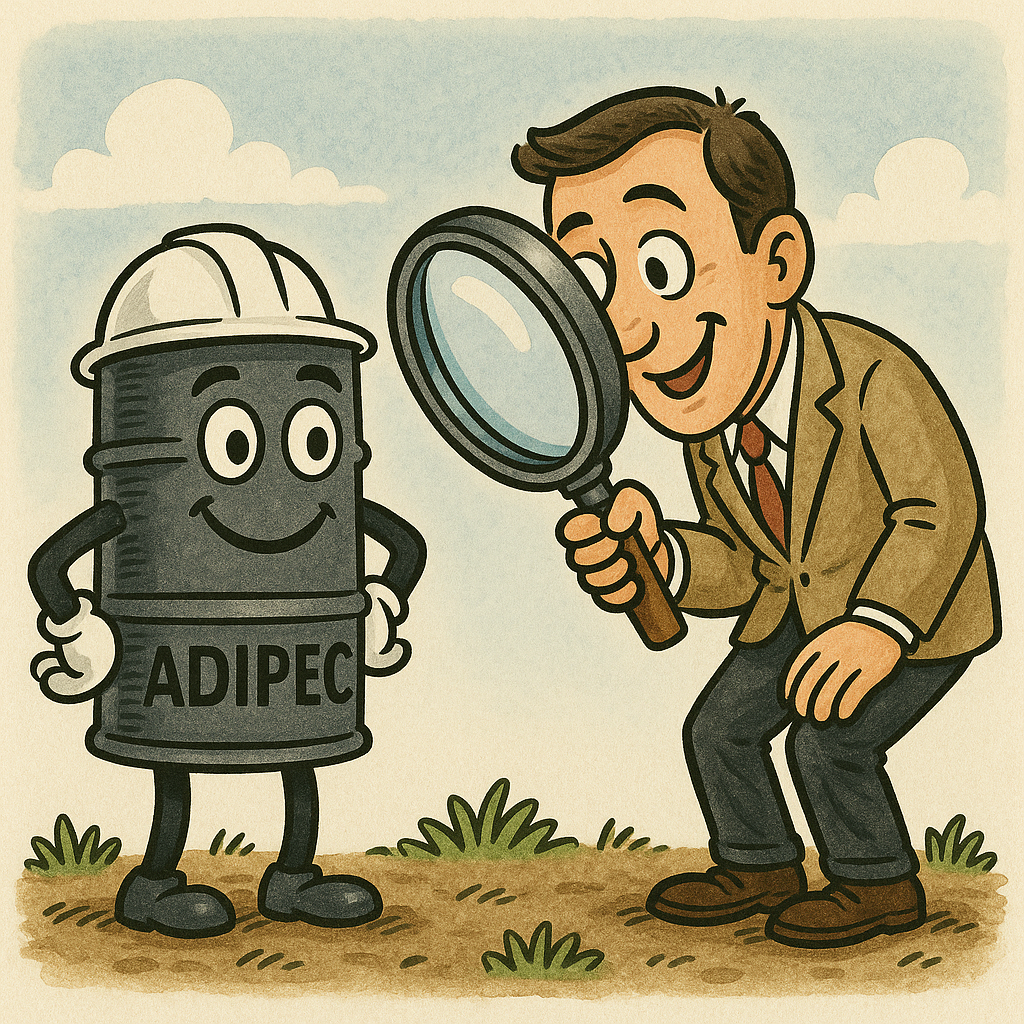
Each October, as the Arabian Gulf’s humidity begins to ease and the conference calendars fill, the global energy industry turns its gaze toward Abu Dhabi. ADIPEC, the Abu Dhabi International Petroleum Exhibition and Conference, has evolved far beyond a trade fair for drilling equipment or upstream technologies. It has become a stage where the politics, economics – and crucially – the communications of the energy world converge.
This year I am looking forward to returning to ADIPEC after a couple years and it will likely feel a little like revisiting an old theatre where the scenery has changed but the leading characters remain familiar. What interests me most is not the new kit on display but the messaging: how the national oil companies and their international partners are shaping their stories in today’s business climate where energy security, transition and reputation jostle for attention.
A Changing Balance of Power
The geopolitical backdrop is unusually fluid.
OPEC+, the extended producers’ alliance dominated by Saudi Arabia and Russia, is in the midst of a phased reversal of the voluntary production cuts that kept barrels off the market through 2023 and 2024. In plain terms, production is rising again, albeit slowly and with an eye on market sentiment.
Yet beneath this seemingly coordinated policy lies some interesting dynamics. While it is to be welcomed that Putin is coming back to the negotiating table, Russia’s economy, constrained by sanctions and dependent on discounted sales to Asian buyers, still needs cash more than it needs cohesion. Its willingness to increase output, even at the cost of a softer oil price, reveals the limits of its influence within OPEC+. The Saudis, meanwhile, have assumed once more the role of stabiliser-in-chief: the nation able to calibrate production, calm markets and project a narrative of responsible stewardship.
This dynamic, Saudi assertiveness offsetting Russian necessity, sets the scene for much of what we’ll hear at ADIPEC. But other players will have a significant role in setting the narrative outcomes.
The Middle East Message
For the host nation, the United Arab Emirates, the script is increasingly clear.
ADNOC’s transformation from a traditional upstream producer into a diversified energy and petrochemicals group is accelerating. Two themes will dominate its narrative this year: LNG growth and carbon management.
At Ruwais, the UAE is developing a 9.6-million-tonnes-per-annum LNG complex designed to compete with Qatar’s massive North Field expansion. It will be the country’s first LNG project to be fully powered by clean energy, a detail likely to feature prominently in their media briefings. In parallel, ADNOC’s carbon-capture and storage programme at Habshan builds upon the earlier Al Reyadah facility, pushing the company toward its 5-million-tonnes-per-year CO₂-capture goal by 2030.
The message is deliberate: we will supply the world reliably, but with steadily lower emissions intensity. In a region often caricatured as reluctant on climate issues, that’s a reputational message that is met with cynicism in some quarters but is worth noting.
Beyond Barrels: The Communication Challenge
All of this underlines how much energy policy today is also energy storytelling.
Markets no longer respond solely to physical supply and demand; they react to confidence, clarity and credibility. When a minister or CEO speaks about “stability,” investors are parsing every word for signals of fiscal discipline, political unity and long-term intent.
For communicators, this creates both an opportunity and a trap. The opportunity lies in translating complex operational strategies into narratives that stakeholders can trust. The trap lies in over-promising or appearing disingenuous, especially when actions lag behind rhetoric.
Consider OPEC+ itself. The alliance insists it is managing supply responsibly, but frequent adjustments, opaque data and diverging member interests invite scepticism. The group’s collective brand depends less on barrels and more on believability. It’s an object lesson in how multinational entities, be they corporations or cartels, must balance internal diversity with external coherence.
Parallels with Corporate Reputation
What strikes me, returning to this world through a communicator’s lens, is how closely OPEC+ mirrors the internal dynamics of any large organisation under stress. Different business units (or countries) have different priorities; leadership must project unity; messaging must reassure external stakeholders while preserving internal flexibility.
Sound familiar? It’s what happens when a corporation restructures, merges or pivots its strategy. The communications challenge is to articulate a single narrative that withstands scrutiny and sustains confidence even when consensus behind the scenes is fragile.
For national oil companies, this task is doubly delicate. They speak simultaneously to governments, citizens, investors and international partners. They are commercial entities with political obligations. Their words can move markets and shape perceptions of national competence. That’s why the tone at ADIPEC matters as much as the announcements.
What to Watch for
As we descend on Abu Dhabi this November, a few narratives will be worth following:
- Reassurance on stability: Expect Saudi Arabia to emphasise measured market management and disciplined investment.
- Credible decarbonisation: The UAE will highlight CCUS, methane reduction and electrified operations as well as emergent technology – proof that producers can cut emissions without cutting ambition.
- Resilience through integration: Aramco’s growing chemicals and downstream footprint will be positioned as value enhancement rather than mere diversification.
- Gas as the bridge fuel: Both Qatar and the UAE will argue that LNG is the pragmatic path between hydrocarbons and renewables.
Each message will have a commercial and a reputational layer – the what and the why it matters. Reading those layers, rather than the literal words, is what makes ADIPEC so revealing.
Framing the Future
For me, this year’s visit will be less about technologies on display (albeit I am looking forward to the ADNOC sponsored AI Pavilion) and more about tone – the words, metaphors and assurances used by the major producers to frame their future.
OPEC+ stands at an inflection point: Russia’s leverage has waned, Saudi Arabia is re-asserting authority, and Gulf producers are refining their climate narratives for a sceptical world.
It will be fascinating to see how those messages are woven together in Abu Dhabi’s conference halls and what they tell us about the next act in the story of oil, power and perception.
Leave a Reply